

 Search
The European Week Against Cancer (EWAC), led by the Association of European Cancer Leagues (ECL), takes place every year from 25–31 May and brings together organisations, healthcare professionals, patient advocates, policymakers, and civil society to raise awareness around cancer prevention, care, survivorship, and policy action.
This year’s campaign highlights the theme:
“Together against cancer inequalities.”
Cancer remains one of the leading causes of death across Europe, with an estimated 1.3 million deaths recorded in 2022 alone. Yet many cancers remain preventable, and inequalities in access to prevention, early detection, treatment, supportive care, and survivorship services continue to affect outcomes across populations.
To mark EWAC 2026, EFAD and the EFAD ESDN Oncology will launch a week-long awareness campaign exploring the role of oncology dietitians across the cancer continuum.
Throughout the week, we will share daily visuals and key messages covering topics including:
- 25 May – Primary Prevention
- 26 May – Early Detection
- 27 May – Access to Medicines & Supportive Care
- 28 May – Patients & Survivors
- 29 May – Research
- 30 May – Digital Health
- 31 May – World No Tobacco Day
The campaign aims to highlight the importance of evidence-based nutrition care, patient-centred support, prevention strategies, and the growing role of dietitians in oncology care and public health.
Follow EFAD throughout the week as we join the European movement to raise awareness and advocate for stronger cancer prevention and supportive care across Europe.
The European Week Against Cancer begins on 25 May with the theme of PRIMARY PREVENTION.
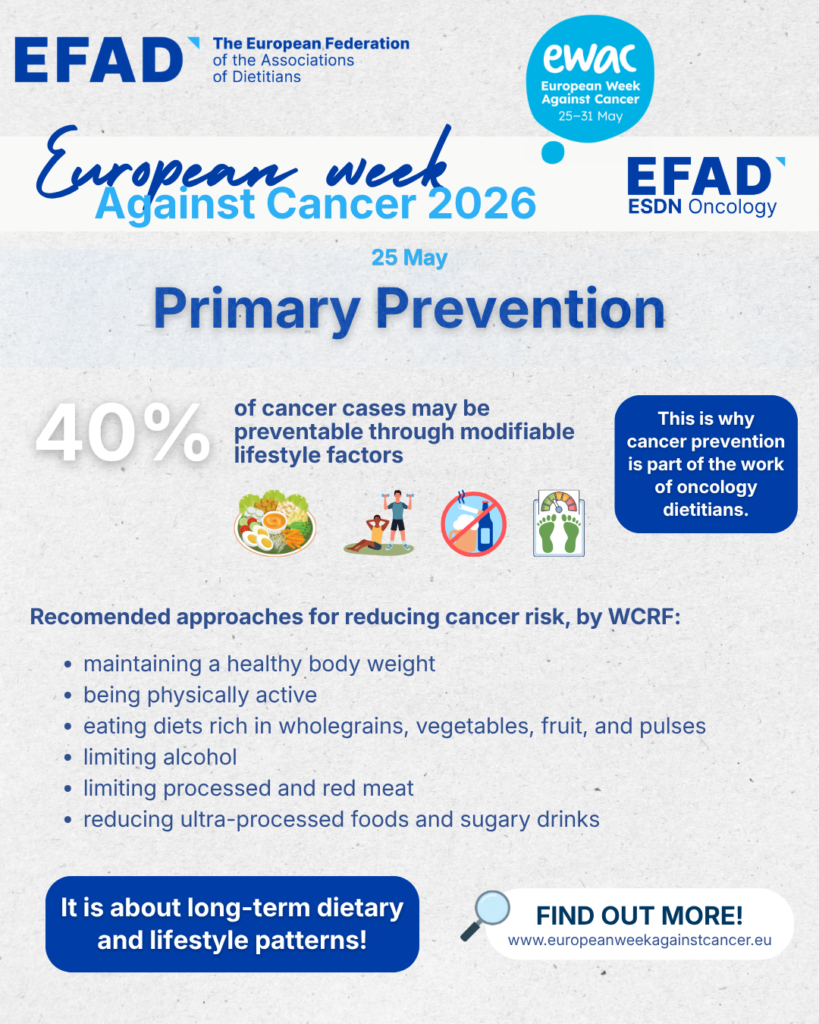
Around 40% of cancer cases may be preventable through modifiable lifestyle factors, including diet, physical activity, alcohol intake, smoking, and body weight.
The World Cancer Research Fund recommendations highlight key evidence-based approaches for reducing cancer risk:
• maintaining a healthy body weight
• being physically active
• eating diets rich in wholegrains, vegetables, fruit, and pulses
• limiting alcohol
• limiting processed and red meat
• reducing ultra-processed foods and sugary drinks
Importantly, prevention is not about individual foods, “superfoods”, or perfection. It is about long-term dietary and lifestyle patterns.
As oncology dietitians, we help translate complex prevention evidence into realistic, sustainable strategies for individuals, communities, and healthcare systems.
📚 References for colleagues interested in prevention science, these papers explore dietary and lifestyle factors linked to cancer prevention and supportive public health strategies:
On 26 May, the European Week Against Cancer focuses on EARLY DETECTION.
Unintentional weight loss is not always “good news”.
Loss of appetite, early satiety, eating difficulties, or unexplained weight changes can sometimes represent important clinical warning signs. Recent evidence highlights the importance of recognising nutrition-related symptoms earlier across cancer pathways.
This is where oncology dietitians can play an important role. Dietitians are often among the healthcare professionals spending the most time discussing eating patterns, weight changes, gastrointestinal symptoms, and barriers to intake with patients.
That means we may identify concerning patterns that patients themselves have normalised for months.
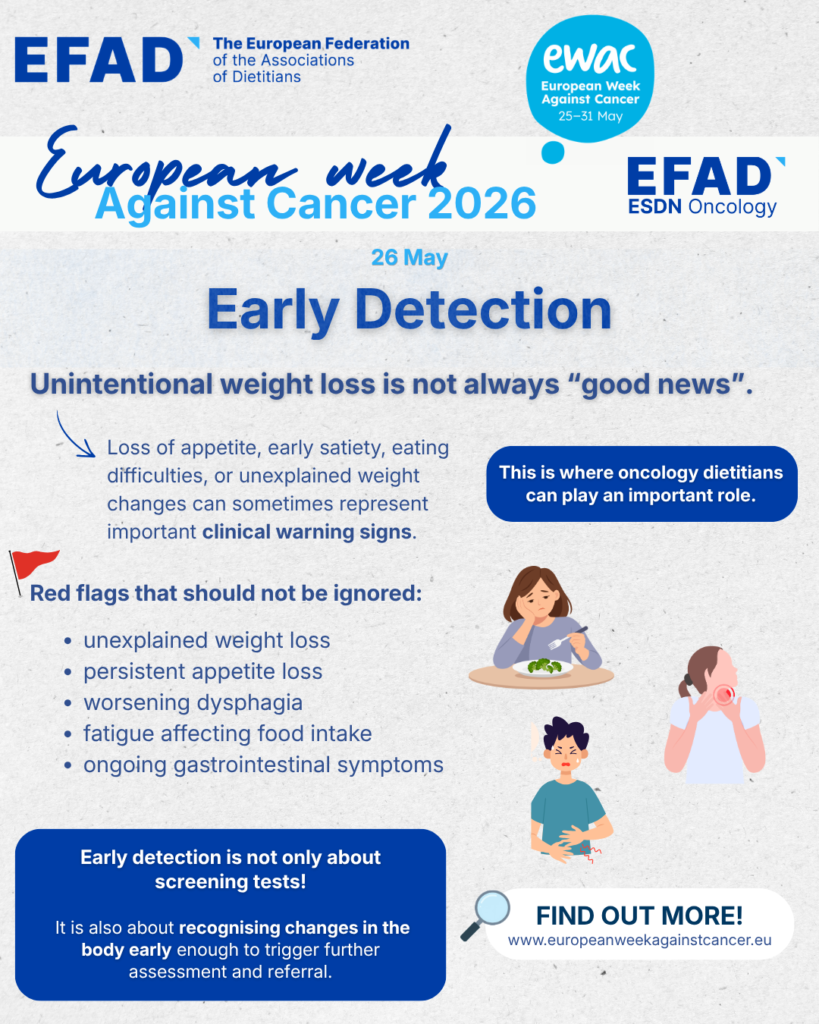
Red flags that should not be ignored include:
• unexplained weight loss
• persistent appetite loss
• worsening dysphagia
• fatigue affecting food intake
• ongoing gastrointestinal symptoms
Early detection is not only about screening tests.
It is also about recognising changes in the body early enough to trigger further assessment and referral.
For colleagues interested in this topic, this paper explores nutrition-related symptom recognition and its relevance across cancer pathways:
Infographic: Nutrition-Related Warning Signs That Should Not Be Ignored
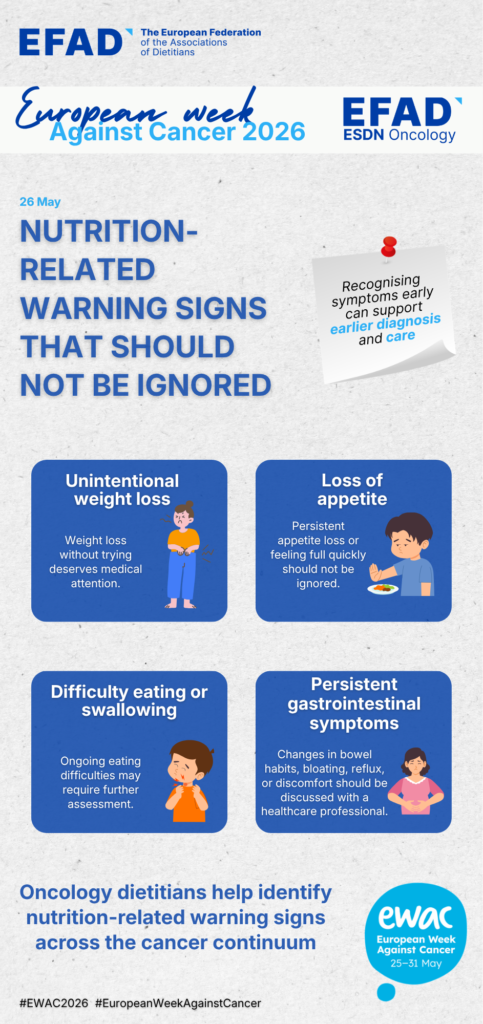
Some nutrition-related symptoms should never be ignored.
Unintentional weight loss, persistent appetite loss, eating or swallowing difficulties, and ongoing gastrointestinal symptoms may be important clinical warning signs warranting further assessment.
Oncology dietitians are often among the healthcare professionals spending the most time discussing eating patterns, weight changes, gastrointestinal symptoms, and barriers to intake with patients. This means we may identify concerning patterns that patients themselves have normalised for months.
Early recognition of symptoms can support earlier diagnosis and care across the cancer continuum.
This infographic, developed by the EFAD ESDN Oncology, highlights nutrition-related warning signs that deserve attention and reinforces the important role of oncology dietitians in early detection and supportive care.
Download the Infographic (pdf).
Download the Infographic (png).
On 27 May, the European Week Against Cancer focuses on ACCESS TO MEDICINES & SUPPORTIVE CARE.
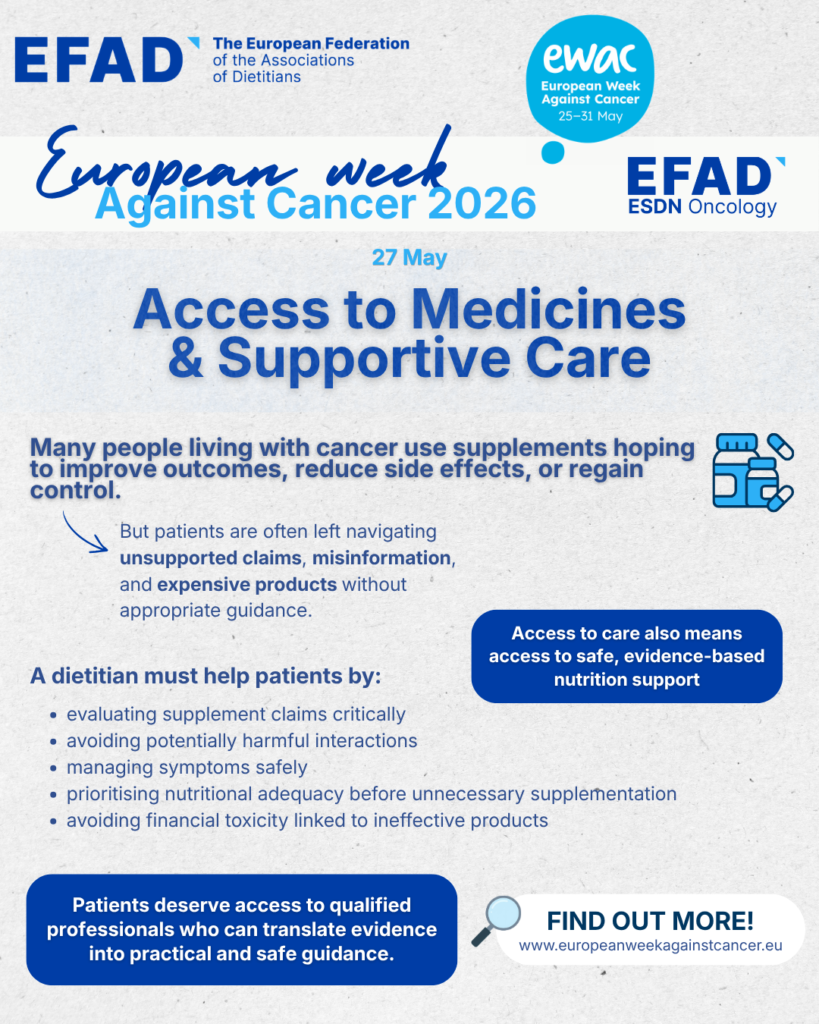
Many people living with cancer use supplements hoping to improve outcomes, reduce side effects, or regain a sense of control. Yet patients are often left navigating unsupported claims, misinformation, and expensive products without appropriate guidance.
From an oncology dietitian’s perspective, access to care also means access to safe, evidence-based nutrition support.
This includes helping patients:
• evaluate supplement claims critically
• avoid potentially harmful interactions
• manage symptoms safely
• prioritise nutritional adequacy before unnecessary supplementation
• avoid financial toxicity linked to ineffective products
Dietitians also play an important role in addressing misinformation circulating online and on social media, particularly around “anti-cancer diets” and high-dose supplement use.
Importantly, survivorship research continues to highlight gaps between nutrition evidence and what patients actually receive in practice. Patients deserve access to qualified professionals who can translate evidence into practical and safe guidance.
For colleagues interested in survivorship and evidence-practice gaps in oncology nutrition, this paper provides an important overview:
On 28 May, the European Week Against Cancer focuses on PATIENTS & SURVIVORS.
Finishing cancer treatment does not mean nutrition challenges suddenly disappear.
Many people living beyond cancer continue to experience:
• fatigue
• gastrointestinal symptoms
• altered taste and appetite
• muscle loss and reduced strength
• anxiety around food and recurrence
• conflicting nutrition information
Yet survivorship nutrition care is still inconsistently integrated into oncology services.
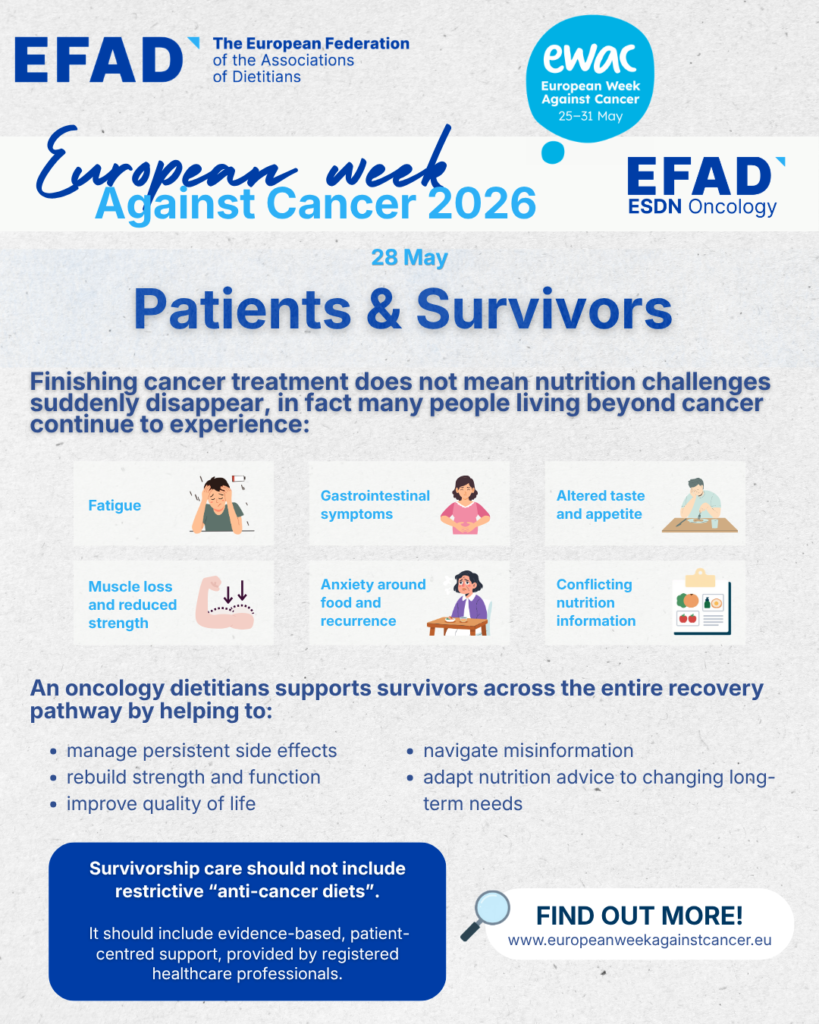
As oncology dietitians, we support survivors across the entire recovery pathway by helping to:
- manage persistent side effects
- rebuild strength and function
- improve quality of life
- navigate misinformation
- adapt nutrition advice to changing long-term needs
Importantly, survivorship care should not include restrictive “anti-cancer diets”. It should include evidence-based, patient-centred support provided by registered healthcare professionals.
For colleagues interested in cancer nutrition support guidelines:
On 29 May, the European Week Against Cancer focuses on RESEARCH.
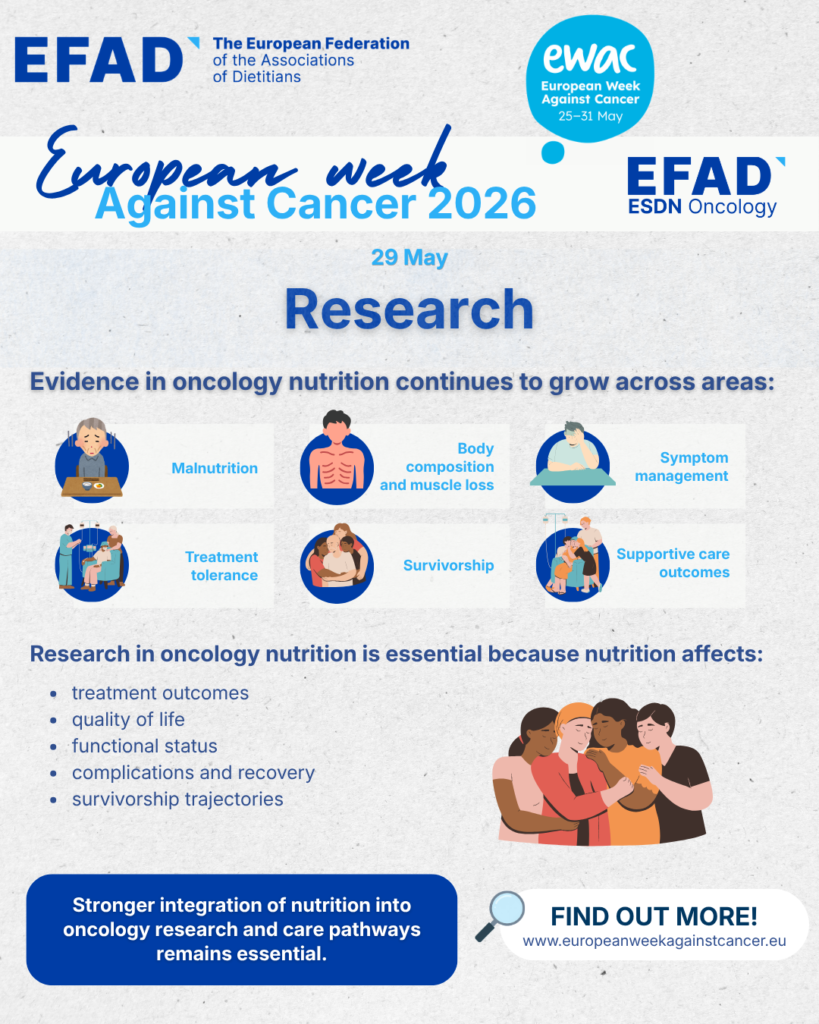
Nutrition research is shaping the future of cancer care.
Evidence in oncology nutrition continues to grow across areas including:
• malnutrition
• body composition and muscle loss
• symptom management
• treatment tolerance
• survivorship
• supportive care outcomes
But generating evidence is only part of the challenge. As oncology dietitians, we also play a key role in translating research into clinical practice, ensuring that evidence reaches patients in meaningful, practical, and safe ways.
Research in oncology nutrition is essential because nutrition affects:
- treatment outcomes
- quality of life
- functional status
- complications and recovery
- survivorship trajectories
Stronger integration of nutrition into oncology research and care pathways remains essential.
For colleagues interested in recent evidence exploring the value of holistic care:
On 30 May, the European Week Against Cancer focuses on DIGITAL HEALTH.
Digital health is rapidly transforming oncology nutrition care.
Recent research highlights the potential of digital tools to improve:
- access to specialist nutrition support
- symptom monitoring
- patient education
- communication across care pathways
- continuity of care during treatment and survivorship
For many patients, digital health can reduce geographical, physical, and organisational barriers to accessing oncology nutrition services.
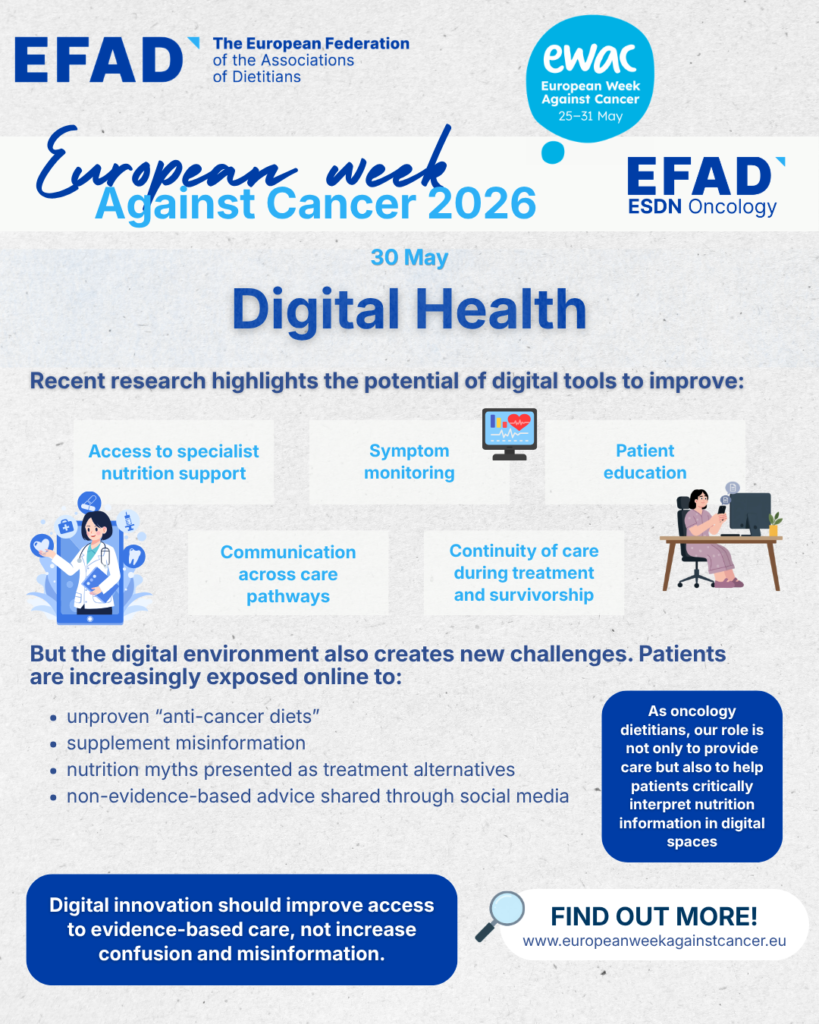
However, the digital environment also creates new challenges. Patients are increasingly exposed online to:
- unproven “anti-cancer diets”
- supplement misinformation
- nutrition myths presented as treatment alternatives
- non-evidence-based advice shared through social media
As oncology dietitians, our role is not only to provide care but also to help patients critically interpret nutrition information in digital spaces.
Digital innovation should improve access to evidence-based care, not increase confusion and misinformation.
For colleagues interested in digital oncology nutrition and online health communication, these papers explore both opportunities and challenges in digital cancer care:
On 31 May, the European Week Against Cancer concludes with WORLD NO TOBACCO DAY.
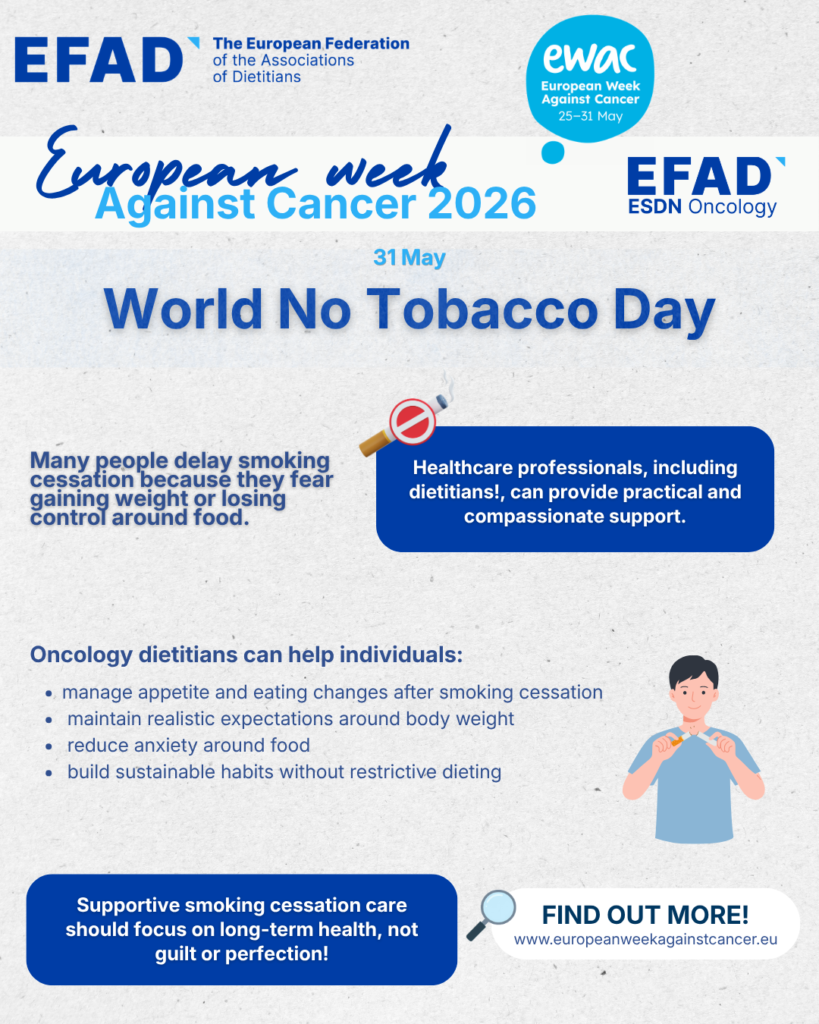
Fear of weight gain should not stop people from quitting smoking.
Weight changes after smoking cessation can happen, but the long-term health benefits of stopping smoking are far greater.
Many people delay smoking cessation because they fear gaining weight or losing control around food. Healthcare professionals, including dietitians, can provide practical and compassionate support throughout this process.
Oncology dietitians can help individuals:
- manage appetite and eating changes after smoking cessation
- maintain realistic expectations around body weight
- reduce anxiety around food
- build sustainable habits without restrictive dieting
Supportive smoking cessation care should focus on long-term health, not guilt or perfection.
NICE guidance on tobacco dependence highlights the importance of evidence-based smoking cessation support as part of healthcare practice:
Stopping smoking remains one of the most important steps for cancer prevention.
This post concludes the EFAD ESDN Oncology campaign for the European Week Against Cancer 2026, highlighting the contribution of oncology dietitians across prevention, early detection, supportive care, survivorship, research, digital health, and smoking cessation.