

 Search
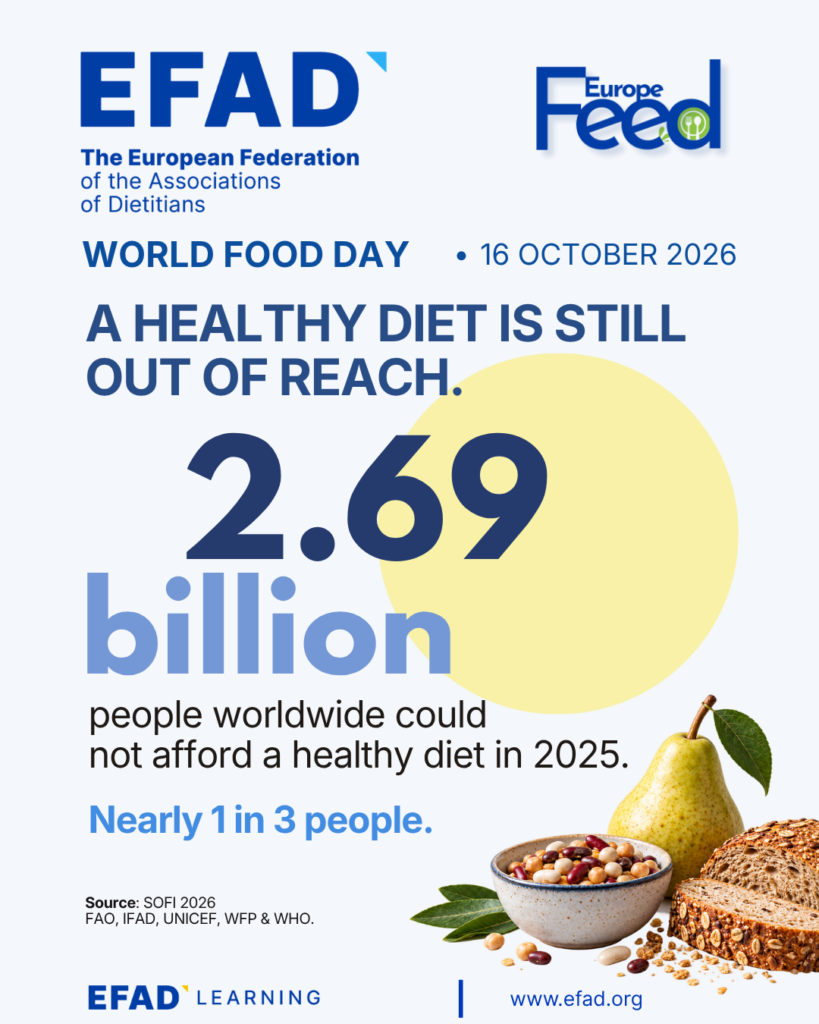
According to the SOFI 2026 figures presented in the campaign, 2.69 billion people worldwide could not afford a healthy diet in 2025, nearly one in three people. This challenge is also evident in dietetic practice: 42.6% of respondents to the FEED Europe survey reported identifying food insecurity weekly or more often.
Beyond dietary advice
Dietitians’ recommendations need to reflect whether people can afford and access the foods they recommend. Elena Carrillo Alvarez emphasises that food insecurity and the cost of healthy diets should form part of routine nutritional assessment, alongside clinical and dietary factors.
Dietitians also contribute beyond individual consultations by generating evidence, informing food and social policies, and advocating for healthier, more affordable food environments. Progress requires coordinated action across food systems, healthcare and social protection.
As Amanda Avery highlights: “Nutritious and enjoyable foods need to be accessible for everyone.” Access is essential for people to put dietary guidance into practice and benefit from a balanced diet.
Healthy diets start in our communities
EFAD’s European Specialist Dietetic Network (ESDN) for Primary Care highlights the importance of bringing dietetic care into local communities.
Primary care dietitians help people translate healthy eating advice into practical choices that reflect their budgets, cultures and everyday lives. Making dietetic care accessible within primary care is part of ensuring that no one is left behind.
Supporting dietitians through FEED Europe
FEED Europe grew from a need raised by EFAD members: to give dietitians more tools to address food insecurity, explains Katarzyna Janiszewska.
Through the Food Insecurity Living Book and regular Journal Clubs, the initiative supports dietitians to explore resources, exchange knowledge and apply evidence in practice.
Making healthy diets accessible takes collective action. EFAD invites dietitians to explore FEED Europe’s resources and contribute to the conversation on addressing food insecurity within their communities and professional practice.
Explore FEED Europe and the Food Insecurity Living Book through EFAD Learning.