

 Search
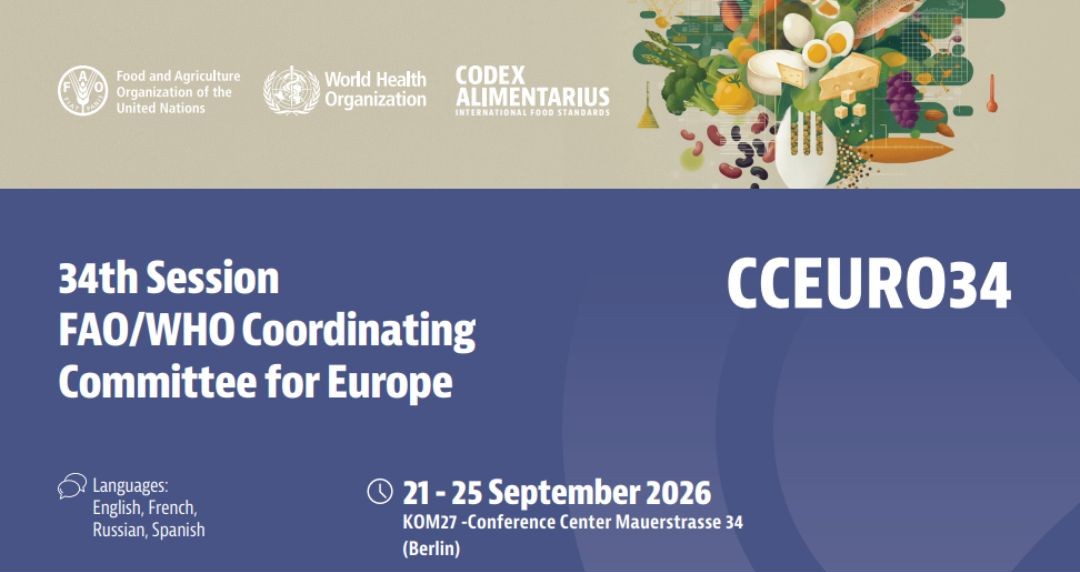
Throughout 2025 and 2026, EFAD’s Codex Alimentarius Committee (ECC) has closely followed CCEURO’s regional work on food-based dietary guidelines, led by an Electronic Working Group (EWG). EFAD took part in the EWG’s virtual meeting in October 2025, contributing the dietetic perspective on how countries across the region develop, implement and monitor their national dietary guidelines.
In April 2026, EFAD submitted formal comments on the EWG’s report. While welcoming its emphasis on food-systems thinking and the integration of sustainability, EFAD used the opportunity to press several points on behalf of the profession: that dietary guidelines are still missing for many population subgroups, such as pregnant and lactating women and older adults; that dietitians should be systematically included in every guideline-development group, alongside other under-represented disciplines like behavioural and social sciences; and that implementation, not just publication, is where dietary guidelines succeed or fail. EFAD pointed to Ireland’s model, where dietitians lead the translation of national guidelines into concrete standards for schools and early-years settings, as an example worth replicating.
At CCEURO34, these conclusions return to the floor under Agenda Item 7, “Dietary guidelines, Review of the EWG work and consideration of follow-up actions.” It is the moment when two years of technical input turn into decisions about the region’s future direction on food-based dietary guidelines, and EFAD will be there to keep the dietitian’s voice and the evidence behind it firmly in the conversation.
Follow EFAD’s Codex work and get involved through the EFAD Codex Alimentarius Committee.